Visited the LOAD ZX Spectrum Museum
Last week I visited the LOAD ZX Spectrum Museum in Cantanhede, Portugal.
The LOAD ZX Museum is dedicated to the ZX Spectrum, which was my first personal computer and also the first for many people in Portugal, Spain, the UK and beyond. The museum also displays other equipment from Sinclair Research, the company that created the ZX Spectrum, and from Timex Portugal, which manufactured Sinclair-based computers under the Timex Sinclair brand.
It’s a small museum, but well organized and with a lot of information about the ZX Spectrum and its history. Entrance was free. The main room is about the ZX Spectrum itself, and a smaller one is about the Timex Portugal factory and its part in the Spectrum’s story.
For many people, the ZX Spectrum was their first contact with technology. In some way, it also influenced me to become a software engineer. Even back then, I was fascinated by how some letters and numbers on a screen could turn into a game or a program.
At the end of the visit, I bought a small souvenir: a pen with the museum’s logo. The best part, though, was seeing the ZX Spectrum again and remembering the good times I had with it as a kid. After the visit, I read more about Sinclair Research and Timex Portugal and how they were connected to the ZX Spectrum. This is a short summary of what I found out.
#A Bit of History
#Sinclair Research
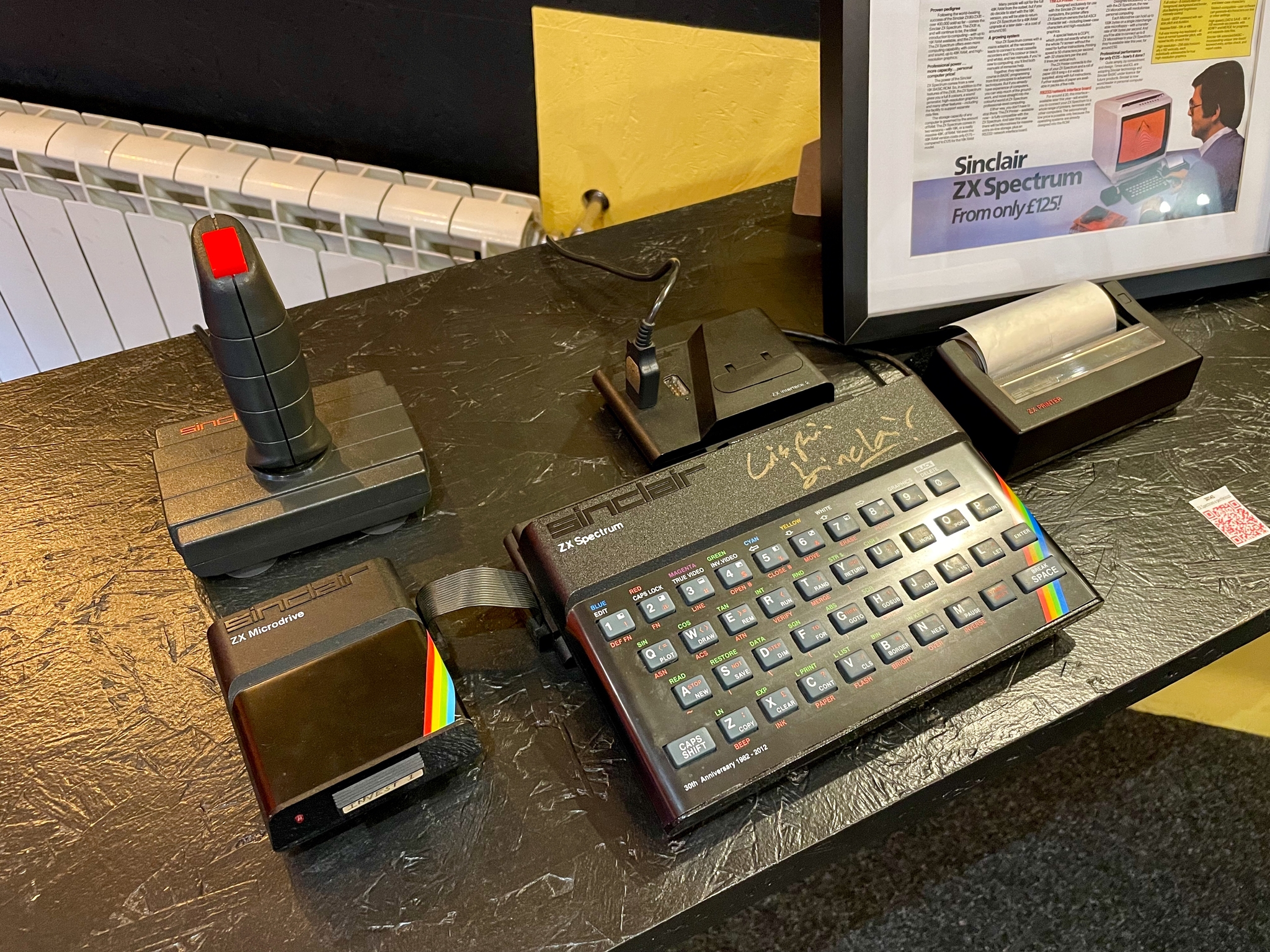
Sinclair Research was a British company that made home computers and other electronic devices. It was founded by Clive Sinclair, a British entrepreneur and inventor.
Clive Sinclair’s earlier company, Sinclair Radionics, made the Sinclair Executive calculator in 1972. Before the ZX Spectrum, Sinclair had already released other computers like the ZX80 in January 1980 and the ZX81 a year later. The ZX Spectrum came out in the UK in 1982, which happens to be the year I was born. It competed hard against computers from Commodore (like the Commodore 64).
#Timex Portugal
Timex arrived in Portugal around 1971. In Europe, it also had factories in Scotland, France and Germany. The Portuguese factory, in Charneca da Caparica, employed more than 2,000 workers making mechanical watches. It also had one of the most advanced workshops in Europe, building machinery for precision tools that were then sent to the company’s other European factories. My mother still has a working mechanical Timex watch from that era, they were quality products.
In the early 1980s, electronic watches quickly replaced mechanical ones. Timex moved watch production to Asia, mainly Thailand and the Philippines, where making electronics was cheaper. To stay in business, Timex Portugal took on high-precision work for companies like IBM and Control Data, such as printed circuit boards and, later, read heads for hard drives. Its clean rooms, which kept out dust and other particles, made it well suited for this kind of work.
#The Timex Sinclair Partnership
In the UK, home computers were starting to take off, and Clive Sinclair needed help mass-producing his new computer, the ZX81, successor to the ZX80. The ZX80 was the cheapest and most accessible computer the market had ever seen, and it sold so well that Sinclair couldn’t keep up with orders. Customers waited months for their machines.
Timex, with falling watch sales, had the technical capacity, the workforce and large-scale distribution in the US and Europe. Its factory complex in Dundee, Scotland, made up of eight factories, started assembling the ZX81, and that was the start of the Timex Sinclair partnership.
#Building Computers in Portugal
The American Timex parent company decided to sell the ZX81 in the US as the T/S 1000. The only differences were the name, an NTSC modulator for the American market, and the memory, increased from 1 KB to 2 KB.
Scotland and Portugal competed internally to build it. The Portuguese factory won, largely thanks to the effort of António Gomes. The first challenge was to produce 500 T/S 1000 computers a day. By mid-1983, Timex Portugal had around 1,000 employees and was building nearly 2,000 computers a day for the American market, along with the 16 KB memory expansions known as RAM Packs. Ahead of Christmas 1983, production peaked at 10,000 machines a day.
#The End of Timex Portugal
By the mid-1980s, IBM PCs and compatibles, and the 16-bit computers from Commodore and Atari, had left the Timex and Sinclair machines far behind. By then, Nintendo and Sega had also taken over the game console market, with Nintendo launching the Famicom (NES) in 1983 and Sega the Mark III (Master System) in 1985.
The Timex Portugal factory stopped in 1989. Legend has it that, during a visit to Portugal, Margaret Thatcher convinced Prime Minister Cavaco Silva to move the Timex Portugal operation to Scotland. The Portuguese know-how and technology went to the Dundee complex to keep jobs there, and the remaining T/S 2068 stock was sold to Argentina. All of the Timex Portugal workers lost their jobs.
#ZX Spectrum +3 Was My First Computer
I was around 8 years old when I first came into contact with computers and computer games, through a ZX Spectrum +3. The computer belonged to my brother, who is a few years older than me, but I could use it and play games on it too.
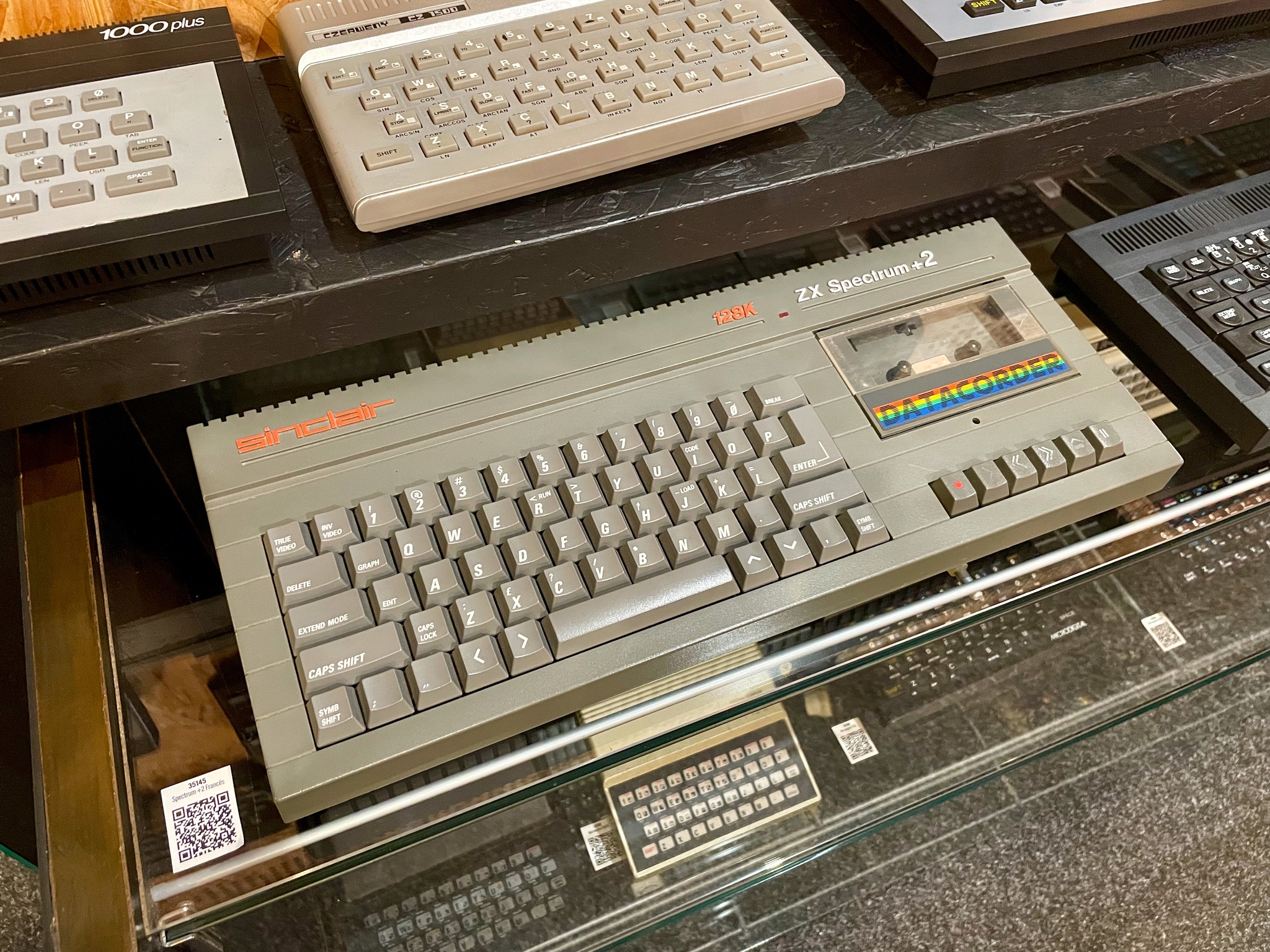

The ZX Spectrum was known for its rubber keyboard and its color graphics, which were a big deal at the time. At first I played on a monochrome monitor, because my parents didn’t let me connect it to the TV, while some of my friends could play their games in color on a color TV. Later I connected it to a color TV as well.
It was also known for its large library of games, many of them made by small independent developers and released by small publishers. To swap games with my friends and neighbors, my brother and I had to change our setup. The ZX Spectrum +3 used floppy disks, but my friends had the ZX Spectrum +2, which used ordinary audio cassettes. So I bought a simple cassette player and connected it to the ZX Spectrum +3, and from then on I could play games on cassette too.
These were some of my favorite games back then:
- ATV Simulator
- Chase H.Q.
- Chuckie Egg
- Cobra
- Commando
- Enduro Racer
- Exolon
- Flying Shark
- Ghosts ‘n Goblins
- Licence to Kill
- Nebulus
- RoboCop
- Starquake
- Super Hang-On
- Target Renegade
- Teenage Mutant Hero Turtles
- Tetris
- The Brick
- The Way of the Exploding Fist
- ThunderCats
#ZX Spectrum Nowadays
Some people say there were more than 150,000 ZX Spectrums in Portugal by 1985, one of the highest rates of computers per household in Europe. A national industry grew around it, from software development to computer repair and maintenance, and even computer magazines.
Technology moved on, and the ZX Spectrum became a distant memory for me. For years I didn’t think about it at all.
The museum made me want to play my old games again. I don’t have a ZX Spectrum +3 or a CRT TV anymore for the authentic experience, but I knew I could still enjoy the games on an emulator. I downloaded the Fuse emulator for macOS and played them again. It was a lot of fun, and it reminded me how much I enjoyed them as a kid.
If you’re ever near Cantanhede, visit the LOAD ZX Spectrum Museum. It’s a good place to relive the ZX Spectrum and learn about its history.